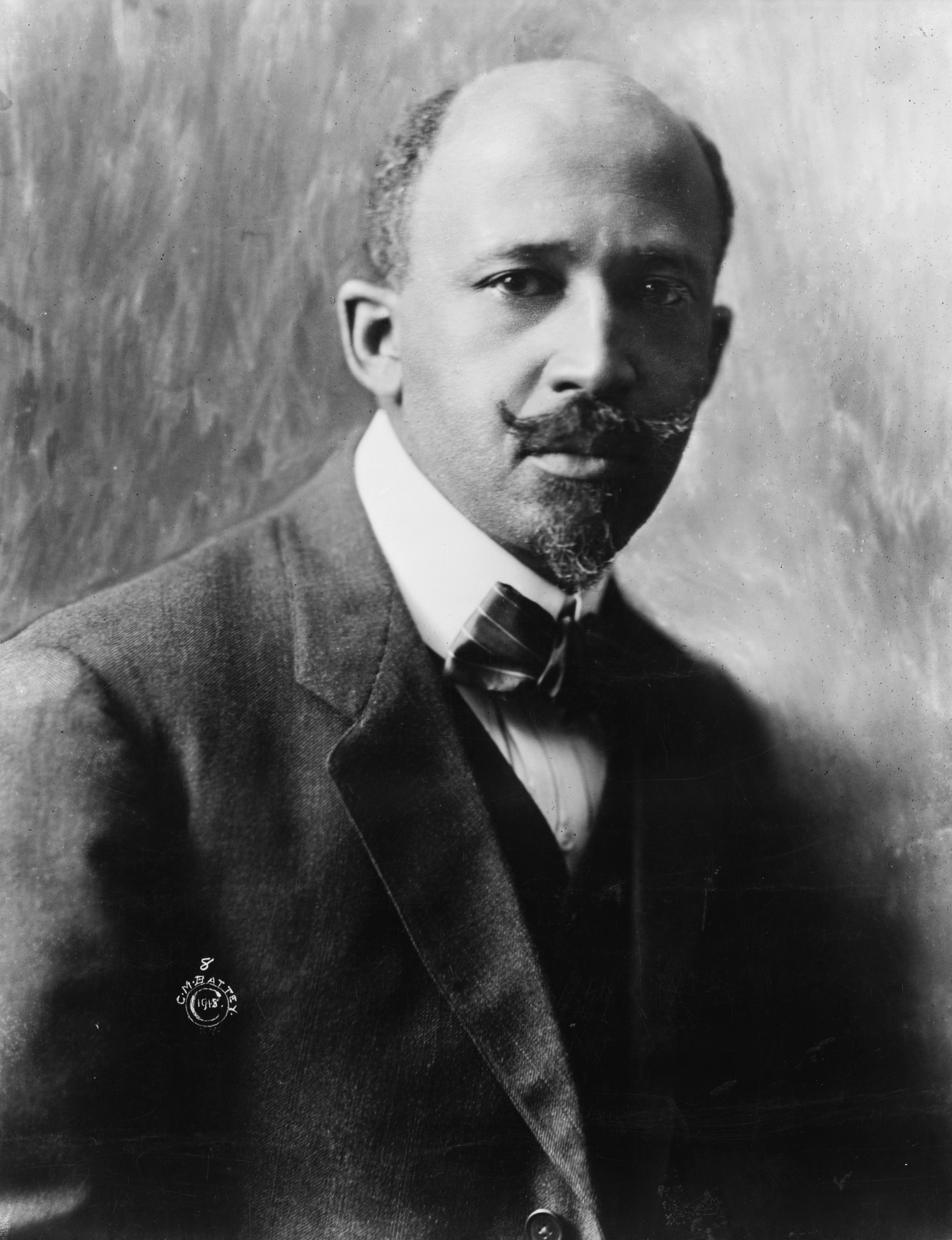
A primary or authoritative source places Du Bois or his writing here.
A source-led journey · Nashville, Wilson County & DeKalb County
W.E.B. Du Bois Heritage Tour of Middle Tennessee
Follow the young Du Bois from Fisk University to the rural school and Black community that shaped one of the defining chapters of The Souls of Black Folk.
This is not a race or a checklist. A completed stop marks exploration—not mastery. Where the evidence is incomplete, the tour says so.
How to read this tour
Every claim carries its weight.
Several clues converge, but the precise historic location remains unconfirmed.
The place helps explain the community, although Du Bois’s presence is not independently proven.
The connection is credible enough to investigate, not strong enough to state as fact.
Interactive route builder
Choose how deeply you want to travel.
0 of 4 explored
1Alexandria town center2Seay Chapel historic site3Alexandria African-American Cemetery4The “tiny community” landscape
Show:
03
DeKalb County · The town Du Bois described in 1891
Alexandria town center
Du Bois wrote a Harvard English paper titled “Dekalb County” on April 16, 1891. The surviving manuscript explicitly describes Alexandria, making the town—not merely the surrounding county—a primary-source location.
“Alexandria was ‘town,’—a straggling, lazy village of houses, churches, and shops.”
W.E.B. Du Bois, “Of the Meaning of Progress,” The Souls of Black Folk (1903); compare his 1891 “Dekalb County” manuscript.
Open the evidence dossier
What the evidence establishes
The 1891 manuscript directly connects Du Bois’s own writing to Alexandria and permits comparison between his description and the surviving townscape.
What remains uncertain
The paper describes a town and social landscape; it does not identify every modern building or authorize claims about where Du Bois stood while writing each observation.
What to observe
Compare scale, transportation and the town’s relationship to the surrounding countryside. Separate what you see from what you infer.
Access note
Public town streets · use ordinary parking and crossings
04
Alexandria · Church, school and cemetery landscape
Seay Chapel historic site
The historic Black Methodist congregation and its property connect worship, education, burial and community organization after emancipation. Documentation associates Du Bois with worship in Alexandria; the current chapel dates from later than his teaching years.
“Hither my little world wended its crooked way on Sunday to meet other worlds.”
W.E.B. Du Bois, “Of the Meaning of Progress,” The Souls of Black Folk (1903). Read alongside Seay Chapel’s National Register documentation.
Open the evidence dossier
What the evidence establishes
Religious gathering was part of the social world Du Bois described, and Seay Chapel preserves a documented Black institutional landscape in Alexandria.
What remains uncertain
The surviving 1931 building is not the structure Du Bois would have known. The association belongs to the congregation and site history, not a false claim that he entered today’s building.
What to observe
Notice the spatial relationship among road, chapel and cemetery. Treat the property as a sacred community place, not an abandoned attraction.
Access note
Sacred and potentially active property · view respectfully from public space unless invited
05
Alexandria · The community’s surviving archive
Alexandria African-American Cemetery
Hundreds of burials—some marked by inscribed stones, others by fieldstones or ground depressions—preserve the clearest physical record of generations in Alexandria’s Black community. The cemetery can help reconnect names in Du Bois’s accounts with families in census, church and land records.
“I have called my tiny community a world, and so its isolation made it.”
W.E.B. Du Bois, “Of the Meaning of Progress,” The Souls of Black Folk (1903).
Open the evidence dossier
What the evidence establishes
The cemetery is material evidence of a long-lived Black community whose history cannot be reduced to Du Bois’s brief presence.
What remains uncertain
Du Bois described a community, not a cemetery inventory. Individual graves should not be linked to his students or hosts without genealogical evidence.
What to observe
Look for different marker forms without touching, rubbing or moving anything. Record names only when legible and avoid photographing mourners or private ceremonies.
Access note
Cemetery etiquette applies · uneven ground and unmarked burials
06
Alexandria vicinity · Households, labor and hope
The “tiny community” landscape
Du Bois wrote about families, labor, debt, aspiration, worship and isolation as an interconnected world. Census schedules, deeds and family research may eventually place more of those households, but the present landscape should be read without trespassing or turning conjecture into fact.
“Sprinkled over hill and dale lay cabins and farmhouses, shut out from the world.”
W.E.B. Du Bois, “Of the Meaning of Progress,” The Souls of Black Folk (1903).
Open the evidence dossier
What the evidence establishes
Du Bois understood the settlement relationally—as families and institutions linked across a rural landscape—not merely as a schoolhouse.
What remains uncertain
The community’s broad setting is defensible; individual house sites, routes and property boundaries require deed, census and map correlation before publication.
What to observe
Ask what distance meant before automobiles: between home and school, work and worship, town and countryside. Do not convert a modern residence into a historic stop without evidence and permission.
Access note
Landscape interpretation only · no private-property access
The story changed as he changed
Four texts. Seventeen years of interpretation.
The strongest version of this tour does not quote only the famous 1903 chapter. It lets visitors see Du Bois revisit, reshape and judge his Tennessee experience across four distinct texts.
“How I Taught School”
The earliest published account, written while Du Bois was still a Fisk student; Fisk Herald 4 (December 1886), p. 10.
“Dekalb County”
A Harvard English 12 theme dated April 16. It directly describes Alexandria and survives in the Du Bois Papers.
“A Negro Schoolmaster in the New South”
The Atlantic Monthly version deepened the narrative and brought the Tennessee school experience to a national readership.
“Of the Meaning of Progress”
The mature version in The Souls of Black Folk turned memory, return and loss into a critique of what America called progress.
Three-question source check
Before you repeat a claim, test it.
- Who created the evidence—and when?A memory written in 1903 and a course paper written in 1891 may describe the same experience differently.
- What does it establish directly?A town description can establish Alexandria without proving the location of every school, house or grave.
- What would disprove the claim?Look for deeds, census records, church minutes, historic maps and conflicting testimony—not only sources that confirm the desired story.
Respect is part of the method
Visit without taking possession of the story.
Stay on public ground
No private driveway, field or residence becomes public because it may be historically relevant.
Treat the cemetery as sacred
Do not move stones, make rubbings, stage portraits or photograph people without permission.
Do not erase the community
Du Bois is the interpretive doorway—not the sole subject. Alexandria’s Black community existed before, during and after his visits.
Submit better evidence
If a deed, family record or oral history changes the route, send it. The correction pathway is a feature, not an embarrassment.
Primary and institutional sources
Follow the evidence beyond this page.
1891 “Dekalb County” manuscriptUMass Amherst · mums312-b230-i088“Of the Meaning of Progress”Public-domain chapter textW.E.B. Du Bois in TennesseeTennessee EncyclopediaW.E.B. Du Bois PapersUMass Amherst finding aidAfrican American Heritage routeContinue through regional Black historyBlack History Discovery HuntPractice evidence-led exploration
Black history · Five distinct ways in
Continue with a different kind of experience.
Each guide has one job. Start with the format that fits your time, companions and questions; together they form a deeper collection without repeating the same trip.
Build a half-day or full-day itinerary →01Follow one life
W.E.B. Du Bois Heritage Tour
A source-led journey from Fisk to Alexandria, built around Du Bois’s own words and the strength of the surviving evidence.
Best forResearchers, educators & a full or DeKalb-focused driveYou are here02Investigate the evidenceBlack History Discovery Hunt
An interactive, observation-led challenge that turns reading, noticing and reflection into eight meaningful discoveries.
Best forFamilies, students & exploring from home or in the fieldOpen experience →03Drive the wider storyAfrican American Heritage Route
A practical regional route connecting schools, churches, cemeteries, museums and Black institution-building across multiple counties.
Best forFirst-time visitors choosing a responsible half-day routeOpen experience →04Go deep on one placeFree Hills Rosenwald School
A place-based history of a living Black community and the school its residents helped build under segregation.
Best forPreservation, education history & a Clay County excursionOpen experience →05Understand the groundThe Land Before the Lake
The broad context: communities, work, displacement and memory beneath today’s recreation landscape, with Black history in its regional setting.
Best forOrientation before any heritage tripOpen experience →